
Skills to Put on a Resume: Complete List for 2026
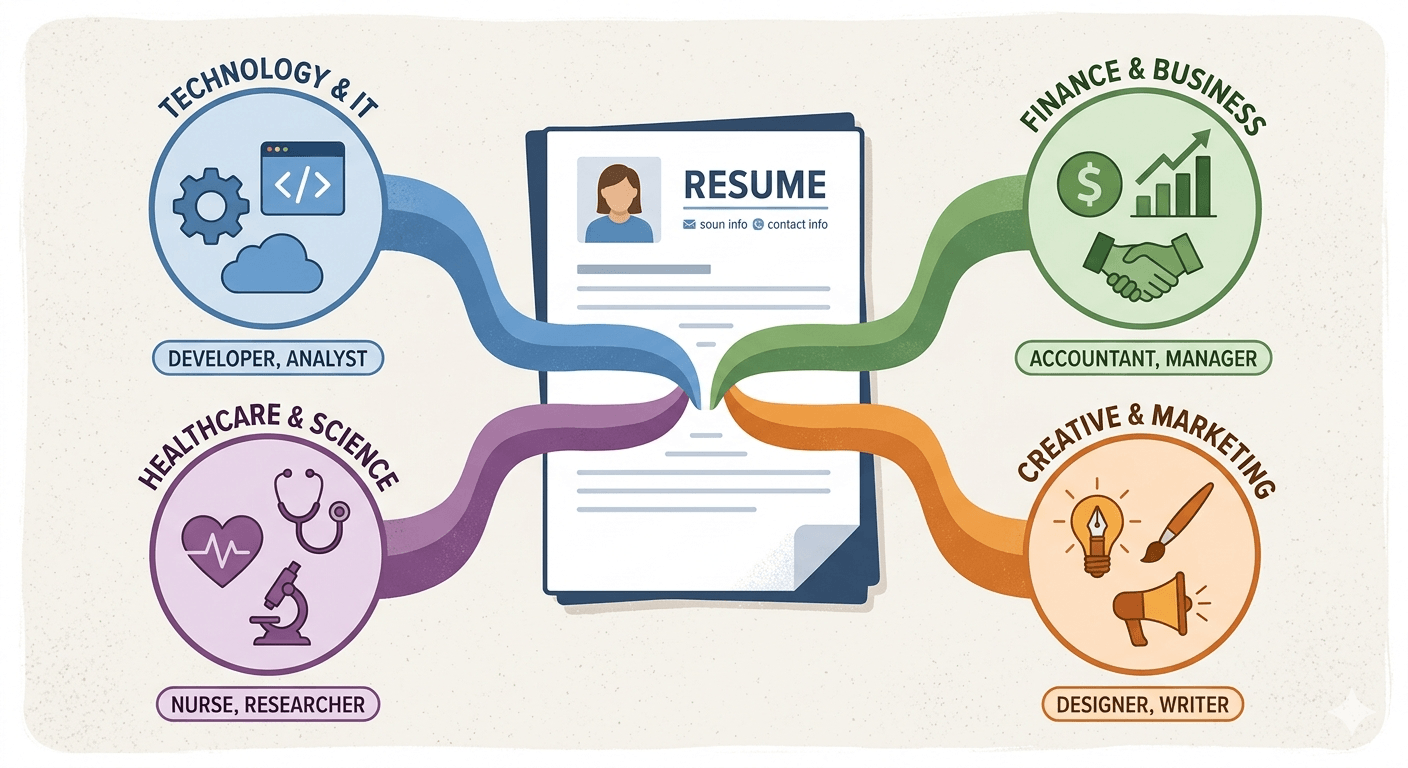
Skills to Put on a Resume: The Complete List by Industry and Role
The skills section of a resume is one of the first things applicant tracking systems scan and one of the first things hiring managers read when they are deciding whether to continue. Getting it right is not about listing every skill you have. It is about listing the right skills in the right way for the specific role you are applying to.
This guide covers which skills to include, how to organize them, what to leave out, and how to write them so they pass both the software filter and the human reader.
The Difference Between Hard Skills and Soft Skills
Every resume skill falls into one of two categories.
Hard skills are specific, measurable abilities that can be taught and verified. Python, Adobe Illustrator, financial modeling, CPR certification, and Spanish fluency are all hard skills. They are the technical requirements of the job.
Soft skills are interpersonal and behavioral qualities that affect how you work. Communication, leadership, adaptability, and problem-solving are soft skills. They are harder to verify but equally important to hiring managers.
Most resume skills sections include a mix of both. The ratio depends on the role. Technical positions weight hard skills heavily. Management and client-facing roles value soft skills more.
How Many Skills to List on a Resume
Between eight and twelve skills is the right range for most resumes. Fewer than six looks thin. More than fifteen starts to look like a keyword-stuffing exercise rather than a genuine representation of your abilities.
For each skill you list, ask yourself two questions. Can you demonstrate this skill in an interview or on the job? And is it relevant to the role you are applying for? If the answer to either is no, leave it out.
Hard Skills to Put on a Resume by Category
Technology and Software
These are among the most searched and most valued skills across industries.
General technology skills:
- Microsoft Office Suite (Word, Excel, PowerPoint, Outlook)
- Google Workspace (Docs, Sheets, Slides, Drive)
- Data entry and database management
- CRM software (Salesforce, HubSpot, Zoho)
- Project management tools (Asana, Trello, Monday.com, Jira)
- Video conferencing (Zoom, Microsoft Teams, Google Meet)
Programming and development:
- Python
- JavaScript
- SQL
- Java
- HTML and CSS
- React or Angular
- Git and version control
- REST API development
- Cloud platforms (AWS, Google Cloud, Azure)
Data and analytics:
- Microsoft Excel (advanced: pivot tables, VLOOKUP, macros)
- Google Analytics
- Tableau or Power BI
- SQL querying
- Statistical analysis
- A/B testing
Design and creative:
- Adobe Photoshop
- Adobe Illustrator
- Adobe InDesign
- Figma
- Canva
- Video editing (Premiere Pro, Final Cut Pro, DaVinci Resolve)
- UI/UX design
Marketing:
- SEO and keyword research
- Google Ads and Meta Ads
- Email marketing (Mailchimp, Klaviyo, HubSpot)
- Social media management
- Content management systems (WordPress, Webflow, Contentful)
- Copywriting and content strategy
Finance and Accounting
- Financial modeling
- QuickBooks and accounting software
- GAAP principles
- Budget management and forecasting
- Accounts payable and receivable
- Tax preparation
- Auditing
- Financial statement analysis
- Excel (advanced)
- ERP systems (SAP, Oracle)
Healthcare and Clinical
- Electronic health records (Epic, Cerner, Meditech)
- Patient assessment
- HIPAA compliance
- Clinical documentation
- Medication administration
- Phlebotomy
- CPR and BLS certification
- Medical coding (ICD-10, CPT)
- Telehealth platforms
Legal
- Legal research (Westlaw, LexisNexis)
- Contract drafting and review
- Case management software
- Discovery and document review
- Deposition preparation
- Regulatory compliance
- Legal writing
Education
- Curriculum development
- Classroom management
- Instructional design
- Learning management systems (Canvas, Blackboard, Moodle)
- Differentiated instruction
- Student assessment and data analysis
- Google Classroom
- Special education support
Trades and Technical Roles
- Equipment operation (specify the equipment)
- OSHA safety compliance
- Blueprint reading
- Quality control and inspection
- Welding (MIG, TIG, stick)
- Electrical systems
- HVAC installation and maintenance
- Forklift certification
- PLC programming
Soft Skills to Put on a Resume
Soft skills are harder to list convincingly because everyone claims to have them. The key is to be specific rather than generic and to demonstrate them in your experience bullets rather than just listing them.
Communication: Written communication, verbal communication, public speaking, active listening, cross-functional collaboration, client-facing communication, technical writing.
Leadership: Team leadership, project management, mentoring and coaching, decision-making, conflict resolution, change management, stakeholder management.
Problem-solving: Critical thinking, analytical thinking, root cause analysis, process improvement, creative problem-solving, troubleshooting.
Organization and time management: Project planning, prioritization, multitasking, deadline management, attention to detail, workflow optimization.
Adaptability: Working in fast-paced environments, learning new tools quickly, managing ambiguity, cross-functional collaboration, remote work.
Customer and client focus: Customer service, relationship management, client onboarding, complaint resolution, needs assessment.
Skills to Include on a Resume for Specific Roles
Software Engineer
Technical:
- Python, JavaScript, or relevant language for the role
- Data structures and algorithms
- System design
- Git and CI/CD pipelines
- Testing frameworks
- Cloud infrastructure
Soft:
- Code review and collaboration
- Technical documentation
- Problem decomposition
Marketing Manager
Technical:
- SEO strategy
- Paid media (Google Ads, Meta)
- Email marketing and automation
- Analytics and reporting
- Brand strategy
- Content management
Soft:
- Cross-functional collaboration
- Creative direction
- Data-driven decision-making
Project Manager
Technical:
- Project management methodologies (Agile, Scrum, PMP)
- Project management software (Jira, Asana, MS Project)
- Budget management
- Risk assessment
- Stakeholder reporting
Soft:
- Leadership
- Communication
- Conflict resolution
- Time management
Customer Service Representative
Technical:
- CRM software
- Help desk tools (Zendesk, Freshdesk)
- Data entry
- Typing speed (words per minute)
Soft:
- Active listening
- Patience
- Problem-solving
- Empathy
- De-escalation
Registered Nurse
Technical:
- Patient assessment
- Electronic health records (Epic, Cerner)
- Medication administration
- Clinical documentation
- Wound care
- IV insertion
Soft:
- Compassionate patient care
- Communication with interdisciplinary teams
- Critical thinking under pressure
- Time management
Accountant
Technical:
- GAAP accounting
- Financial statement preparation
- QuickBooks or ERP software
- Tax compliance
- Audit support
- Excel (advanced)
Soft:
- Attention to detail
- Analytical thinking
- Deadline management
Skills to Leave Off Your Resume
Basic computer skills. Listing that you can use the internet or send emails signals that you are padding the section. These are assumed in most roles today.
Skills you cannot back up in an interview. If someone asked you to demonstrate this skill tomorrow, could you? If not, leave it out.
Outdated software. Listing Windows XP or Internet Explorer proficiency does more harm than good. Keep your technology skills current.
Generic personality traits without context. "Hard worker" and "team player" carry no weight on their own. Show these qualities in your experience bullets instead.
Skills completely unrelated to the role. A software engineering resume does not need to list your baking skills unless you are applying to a food tech company.
How to Format the Skills Section on Your Resume
Option 1: Simple bulleted list
Skills: Python, SQL, Tableau, Excel, Data Visualization, Statistical Analysis, A/B Testing, Communication, Problem-Solving
This is the cleanest option and is easiest for ATS software to parse.
Option 2: Categorized skills
Technical Skills: Python, SQL, Tableau, Excel Analytics: A/B Testing, Statistical Analysis, Google Analytics Tools: Jira, Confluence, Slack
This format works well when you have a large number of skills across distinct categories.
Option 3: Skills with proficiency levels
Python: Advanced SQL: Intermediate Tableau: Intermediate
Use this sparingly. Labeling yourself as "beginner" in a skill that is central to the role raises questions. Only use proficiency labels when the difference between levels is meaningful and honest.
Matching Your Skills to the Job Description
The most important resume strategy is keyword matching. Employers and ATS systems scan for the exact skills listed in the job posting. Read the job description carefully and identify every specific skill mentioned. If you have that skill, use the exact phrasing from the posting in your resume.
If the job posting says "proficiency in Salesforce CRM" and you write "CRM experience," the ATS may not flag your resume as a match even though you have the skill. Exact phrasing matters.
Build a version of your skills section for each job category you are applying to. You do not need to rewrite your entire resume for each application, but tailoring the skills section specifically to each role significantly improves your match rate.
Building Your Resume With the Right Skills Highlighted
Once you know which skills to include, the formatting and layout of your resume determines how clearly they communicate to a hiring manager. ReverseToolkit's resume builder helps you structure your resume with the skills section positioned correctly, formatted consistently, and ready to download as a PDF or Word file. No account required. Try it at ReverseToolkit Resume Builder.
Frequently Asked Questions
What are the best skills to put on a resume in 2026?
The most in-demand skills across industries in 2026 are AI tool proficiency, data analysis, project management, cloud platform experience, and communication. Within your specific field, the best skills are those explicitly listed in the job postings you are targeting. Keyword matching to job descriptions is more important than any generic list.
How many skills should I list on a resume?
Between eight and twelve skills is ideal for most roles. Fewer than six looks thin. More than fifteen dilutes the impact and can trigger skepticism from hiring managers. Prioritize quality and relevance over quantity.
Should I put soft skills on my resume?
Yes, but selectively. Choose soft skills that are genuinely relevant to the role and that you can support with specific examples in your experience section. Generic soft skills like "hard worker" or "team player" without context add little value.
What are good skills to put on a resume with no experience?
Focus on transferable skills from academic projects, volunteer work, part-time jobs, and extracurricular activities. Technology skills, communication, research, organization, and language proficiency are all valid. Be honest about your level and frame skills in terms of what you have used them for.
Where should the skills section go on a resume?
For experienced candidates, the skills section typically appears after the work experience section. For career changers, recent graduates, or people whose skills are their primary qualification, placing the skills section near the top, just below the summary, can be more effective.
Should I list Microsoft Office as a skill on my resume?
Only if the job posting specifically mentions it or if advanced Excel skills are relevant to the role. Basic Office proficiency is assumed in most professional environments and listing it without qualification can make your skills section look thin.
The skills section of your resume is not a place to list everything you have ever learned. It is a curated, strategic selection of abilities that positions you as the right candidate for the specific role you want. Match the job description, be honest about your level, and demonstrate your skills through your experience bullets where possible. That combination is what moves a resume from the pile to the interview.